three very good things to do with fig leaves
ft. fig leaf ice-cream, oil and dust

What I’m reading: Tender at the Bone by Ruth Reichl. If I had a euro for every time I was recommended this book - I’d have at least a tenner by now. I’m about halfway through, and thoroughly enjoying it so far. The descriptions of characters are particularly evocative and I am entertained (if slightly disturbed) at Reichl’s narrative of her slightly chaotic childhood
What I’m listening to: The BBC’s World of Secrets - new season
What I’m eating: a really lovely meal at The Latimer (below) - my new local, and a great pub


Happy Bealtaine! It’s officially summer (at least, according to the Irish pagan calendar) and the produce is starting to look distinctly summery. Although figs don’t come in until late summer/early autumn, the leaves on the same trees are beautifully fragrant at the moment. My running route takes me along the canal under an enormous fig tree, and the smell at this time of year and throughout the summer is really magical. If you’ve never tried anything with fig leaf in it, it’s kind of a green/coconut/vanilla flavour. In my opinion, it doesn’t really resemble the flavour of a fig, but has a whole flavour profile of its own.
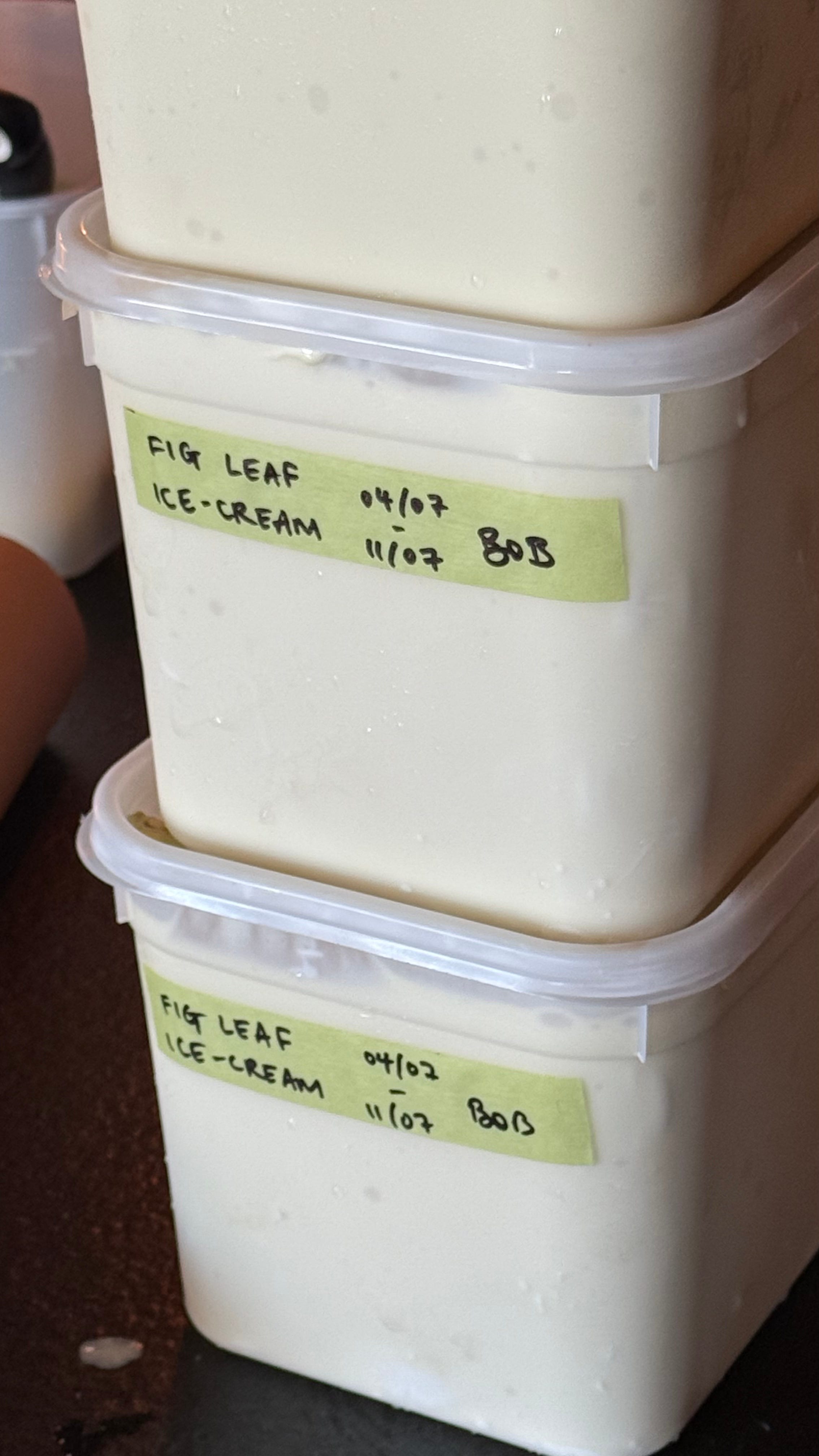
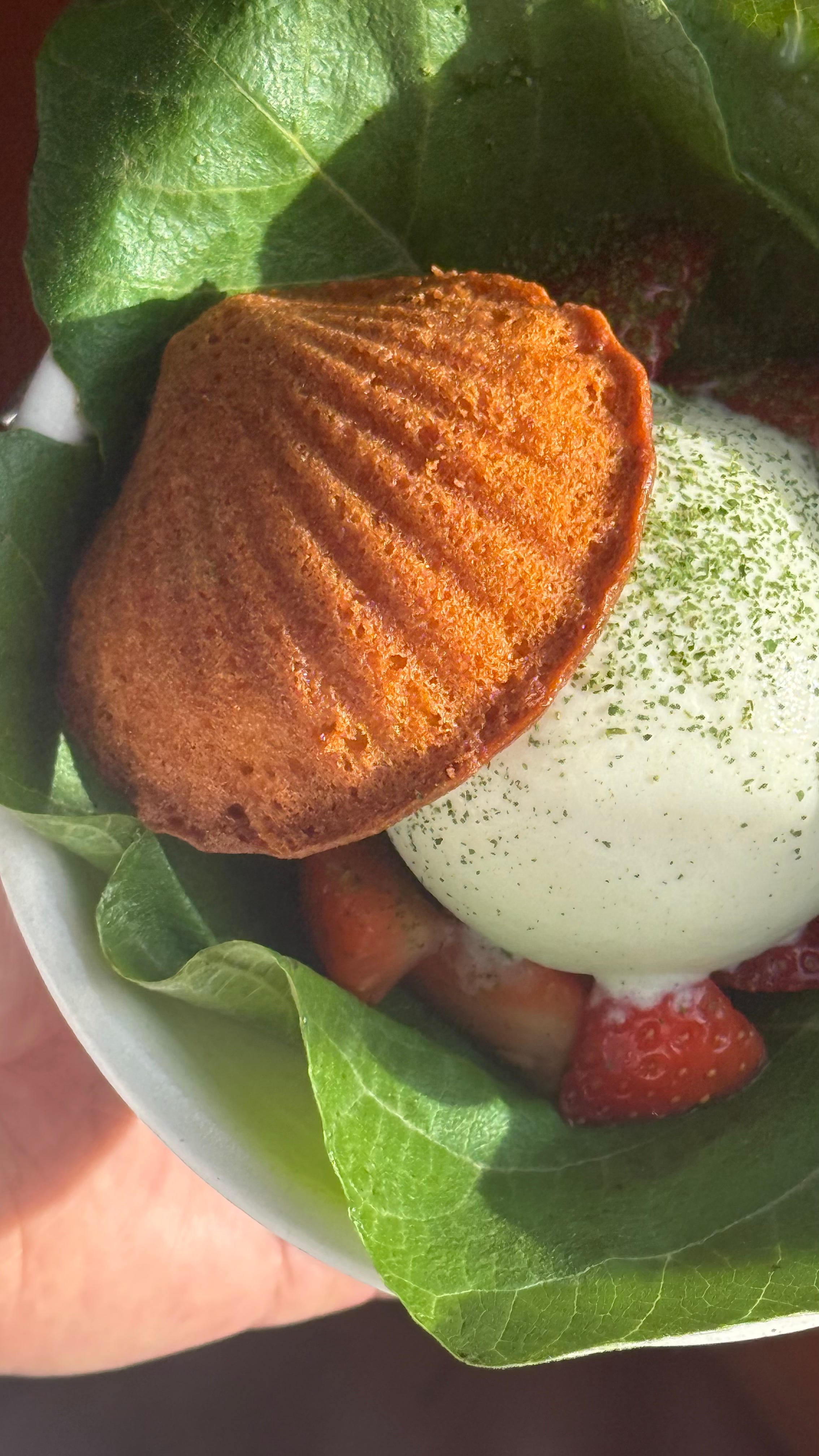
You can’t (or at least I wouldn’t) eat fig leaves whole - so to get that wonderful flavour, you need to either infuse or extract the leaves into your desired vessel. I love infusing the leaves into dairy products like cream and milk. A fig leaf custard or ice-cream is a really exceptional thing to make, and if you’ve never tried fig leaves, I think this is the best way to enjoy them. Since one of the primary tasting notes is coconut, and coconut famously goes marvellously with raspberries, I’ve paired our fig leaf ice-cream at the Fat Badger with fresh raspberries, plus a lovely fig leaf oil and dust. The oil and dust are very much gilding the lily - which happens to be a hobby of mine. It’s quite fun to go all in on the FIG LEAF flavour. We’re also serving this dessert with freshly baked madeleines - more on that later.
(I quite enjoy the fact that this dessert combines the madeleine (in a classic scallop shell shape) and the fig leaves - both in their own ways symbols of nudity in art and mythology. Always fun to make people blush!!)
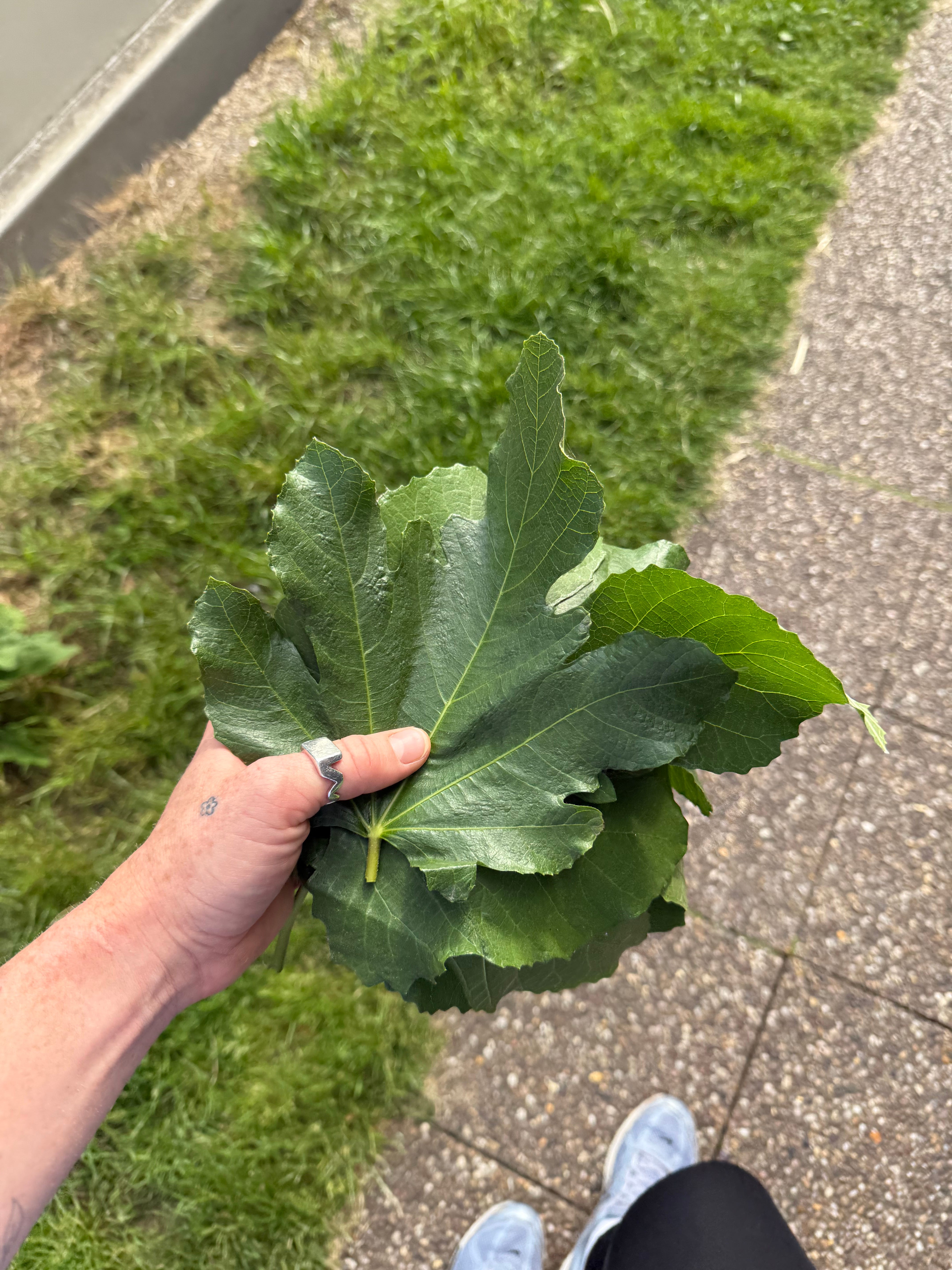
If you have a fig leaf in your garden (or perhaps your neighbour’s garden) and the figs are inedible - the leaves are likely still good to use! There’s a fig tree in our family home in Dublin and although the figs are never worth eating (I think we don’t get enough sun), the leaves are still lovely and fragrant. There are also loads of trees in public places (in London anyway), so I recommend keeping an eye out on your next walk! They look like almost like lovely big glossy oak leaves - see above for a reference picture, and don’t be alarmed if they don’t smell particularly strong - they will once they’ve been toasted.
I always toast my fig leaves lightly before using, as it really helps to bring out the flavour. You can spread them out on a baking tray and toast them gently in the oven, or if you like, you can wave each leaf one by one over an open flame (like your gas cooker).
recipe: fig leaf ice-cream